
I choose a necklace set by matching its design and length to my outfit and occasion. Then I check that its materials and fit suit how I plan to wear it. The strongest choice balances design, occasion, material, and comfort. My wardrobe and preferences help me narrow the options, so the set feels like mine. Personal style matters as much as the look in a product photo.
My method for how to choose a necklace set starts with clothes I already reach for. I also think about the occasions ahead, from family gatherings to evenings out. A set that suits my usual colors and shapes can earn a place in my regular rotation. It need not match every outfit, but it should feel easy to wear with several.
I look for pieces that feel like a natural part of my collection, rather than a costume I rarely take out. A set I feel comfortable wearing with clothes I already own is more useful than one chosen only for a single photograph.
Key Takeaways
- Match the set’s design and length to the outfit and event.
- Let the outfit or jewellery set the visual focus.
- Compare gold purity labels and check the HUID before buying.
- Try the necklace and earrings for comfort before a long event.
- Choose details that suit your taste and clothes you already own.
How to Choose a Necklace Set for Each Occasion
For a wedding saree or lehenga, I can choose a detailed set that echoes the outfit. A heavily embellished neckline may call for a simpler design. I balance decoration and color so the set supports the outfit instead of competing with it. A clear focal point makes even rich designs feel considered.
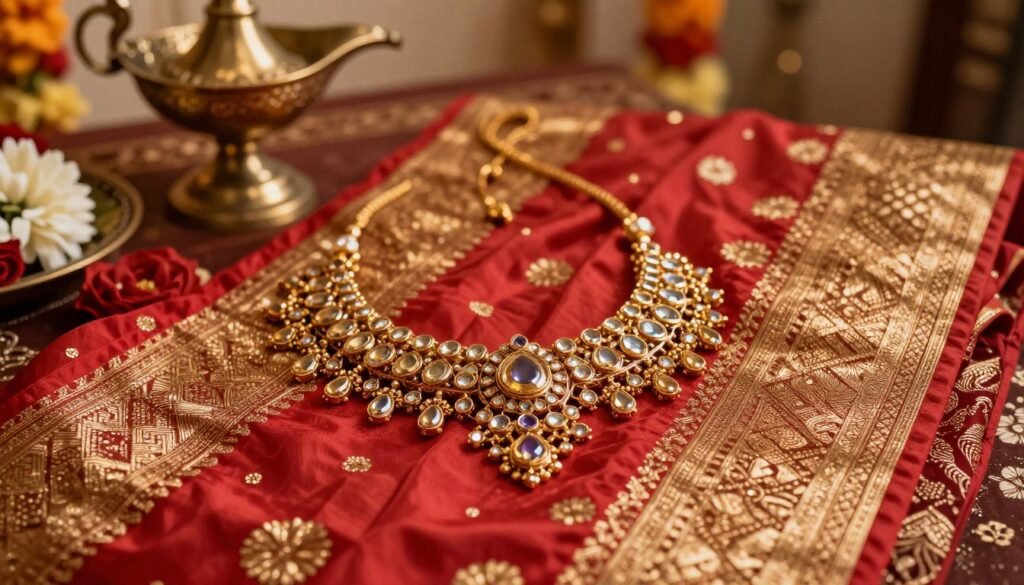
I look at the outfit’s pattern, color, and visual weight before settling on a style. A plain dress can make one statement necklace stand out, while busy embroidery may already provide enough detail. Color can connect the two pieces, but an exact match is not needed.
Let either the outfit or the necklace lead; avoid asking both to compete for attention.
These four situations help me narrow designs without treating an event as a strict dress code:
- Wedding with a saree or lehenga: a statement set can suit the rich fabric and formal setting.
- Festive clothing: traditional details can give the full look a strong sense of occasion.
- Casual party: a minimal necklace keeps a relaxed outfit from feeling overdone.
- Formal evening outfit: one polished focal piece can bring a simple dress into focus.
A celebratory event does not always call for the most ornate choice. If my clothes already have heavy beadwork or a decorated neckline, I let the set stay quiet. The outfit’s color also matters: a strong contrast can feel deliberate, while a close match can create a softer look.
Before choosing a dramatic set for a special event, I check whether its color and level of detail work with more than one outfit I plan to wear.
Neckline and Length Pairings That Work
An 18-inch chain is a practical everyday starting point. I still compare its position with the neckline I wear most. The actual cut of a top can change where the same necklace lands. Body movement may shift it, too.
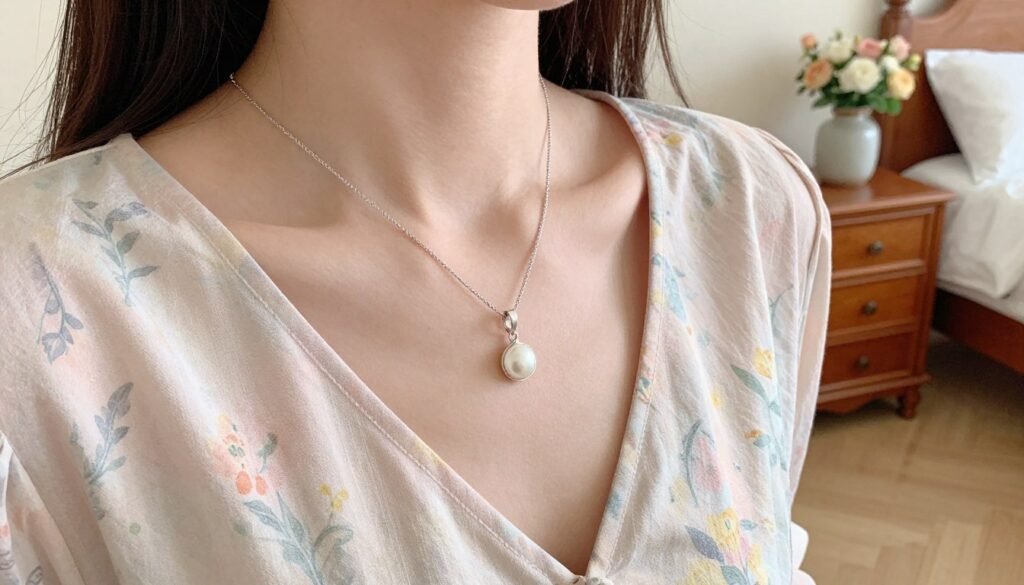
Necklace Lengths and Where They Sit
These common ranges give me a useful first estimate. The table shows where each length often falls and how I might style it.
| Length | Common name | Where it sits | Styling use |
|---|---|---|---|
| 14-16 inches | Choker | Close around the neck | Works with an open neckline |
| 17-19 inches | Princess | At or just below the collarbone | A common everyday choice |
| 20-24 inches | Matinee | Upper chest | Adds space below a short chain |
| 28-34 inches | Opera | Mid-chest or lower | Can be worn long or doubled |
| 36+ inches | Rope | Lower on the torso | Suits a long, flowing line |
Matching the Shape to the Neckline
A V-neck often works with a pendant that follows its line. A crew neck pairs well with a short or medium chain, depending on its opening. With a high neck, I can use a longer necklace to create a clear line down the front.
Necklines vary across garments, even when they share the same name. Fabric thickness and neckline depth can lift or lower the point where a necklace rests. I also watch how the piece moves when I sit, turn, and reach.
I check the necklace over the actual garment, since fabric and neckline depth can change where the same length falls.
Gold Purity, Color, and Hallmark Basics
A gold purity label tells me the grade of the metal, while fineness gives that purity in parts per thousand. Caratage is the purity grade of gold expressed on a 24-part scale. A higher caratage means a larger share of gold in the alloy.
Read Caratage Alongside Fineness
Gold fineness is measured in parts per thousand (ppt). The BIS mandatory hallmarking framework covers these seven caratage and minimum-fineness pairs:
9K: 375 ppt; 14K: 585 ppt; 18K: 750 ppt; 20K: 833 ppt; 22K: 916 ppt; 23K: 958 ppt; and 24KS: 995 ppt.
For example, a 22K label pairs with a minimum fineness of 916 ppt. Comparing both details helps me read the stated gold grade in two ways. Gold used in jewellery is mixed with other metals because pure gold is too soft to withstand regular wear.
Choose a Gold Color I Enjoy Wearing
Alloy metals also affect the color of a gold necklace. Yellow gold keeps a warm, classic tone. White gold has a cooler, pale look, while rose gold has a soft pink tone.
Copper gives rose gold its color. The metal color can change the feel of a piece without changing the way I style it. I might choose yellow gold for a warm contrast, or white gold when I prefer a cooler finish.
Some people use skin undertones as an optional styling cue. A warm undertone may draw them to yellow or rose gold, while a cool undertone may favor white gold. I treat that as an idea to try, not a rule that limits my choice.
In daily wear, the gold color that feels right to me matters more than a styling formula. I choose yellow, white, or rose gold by the tone I want to wear, rather than treating undertone advice as a strict rule.
Verify the Hallmark Before You Buy
I look for the BIS Standard Mark, the stated purity or caratage and fineness, and the HUID. I do not rely on a verbal purity claim alone. A gold hallmark has three components: the BIS Standard Mark, purity details, and a six-digit alphanumeric HUID.
Since 1 July 2021, these three marks form the gold hallmark. I use this short checklist when I inspect a piece:
- BIS Standard Mark.
- Purity or caratage and fineness.
- Six-digit alphanumeric HUID.
- HUID checked with the Verify HUID feature in the BIS Care App.
Read the Three Hallmark Components
The HUID is the unique identification code on the gold article. I enter its six letters and numbers into the Verify HUID feature of the BIS Care App. That check helps me compare the code with the article’s recorded details.
Check Coverage and Exemptions
Mandatory hallmarking is district-based, not the same as a blanket rule for every place and article. It began on 23 June 2021 in 256 districts. The BIS order dated 3 August 2026 showed coverage had expanded to 392 districts.
Some articles may be exempt under applicable orders and guidelines. Gold articles below 2 grams, along with Kundan, Polki, and Jadau articles, are among the named exemptions. These are conditional exemptions, not a reason to assume every such piece falls outside the rules.
If the HUID does not verify, I pause the purchase and resolve the discrepancy before treating the article as verified.
Comfort and Nickel Sensitivity
I test comfort by wearing the set for a few minutes and checking whether the necklace and matching earrings feel secure without pinching. A set should feel manageable for the length of time I plan to wear it. I notice pressure, weight, and any spot that rubs.
Check Fit for the Way I Will Wear It
A piece that feels fine for a brief try-on may feel different after hours at an event. I move my head, sit down, and turn to see whether the necklace stays comfortable. Matching earrings should not pull or feel heavy enough to distract me.
My comfort can also depend on the outfit. A necklace may catch on a scarf or feel tight over a high collar. I check the set with the clothes I expect to wear, not only on bare skin.
Treat Nickel Allergy as a Real Consideration
People with a known metal allergy can check material details and seek medical advice when needed. Gold pieces may include other metals, so I do not assume a gold label means every part has the same makeup.
A 2025 systematic review and meta-analysis found an association between piercings and nickel allergy in the general population. It reported an odds ratio of 5.9, with a 95% confidence interval of 3.6-9.4, across 5,333 people.
Among dermatitis patients, the review found an association with an odds ratio of 3.6. Its 95% confidence interval was 2.3-5.8, across 20,330 people. These findings show an association, not proof that a piercing caused nickel allergy.
Dimethylglyoxime screening found critical nickel release in 11.3% of European earrings, 34.5% of earrings from Asia, and 31.1% from North America. EU nickel-release limits are below 0.2 μg/cm²/week for piercing posts and at most 0.5 μg/cm²/week for earring parts in direct, prolonged skin contact. These are EU limits, not Indian rules.
If I have a known nickel allergy or develop a reaction, I stop wearing the suspect piece and seek appropriate medical advice.
Chains, Pendants, and Layered Designs
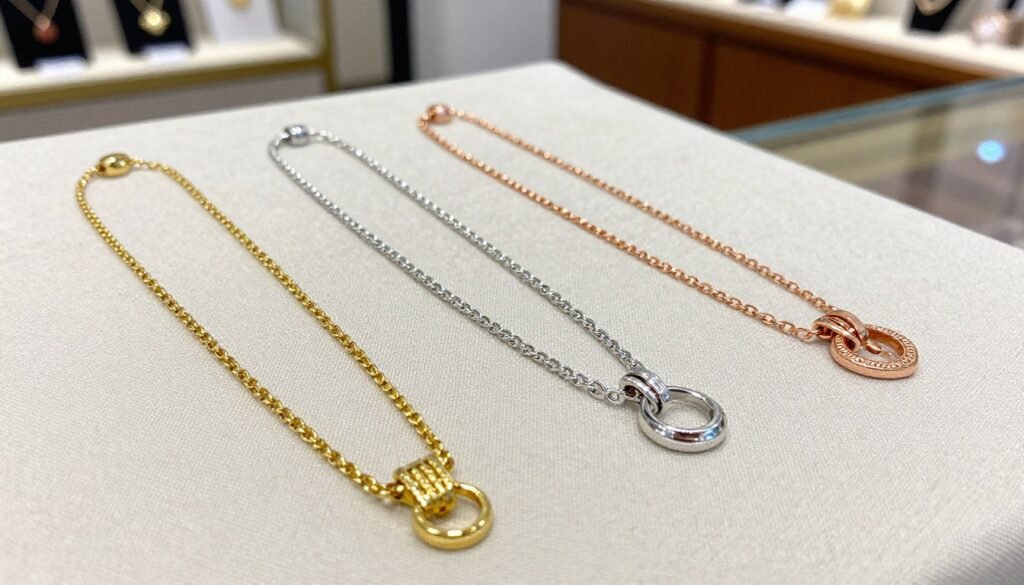
A cable chain uses simple connected links, while a rope chain adds texture through twisted links. I choose a chain style for the detail I want, not just its name. The link shape changes the necklace’s visual effect.
| Chain style | Link construction | Visual effect | Common styling use |
|---|---|---|---|
| Cable | Simple connected links | Clean and familiar | Plain chain or pendant |
| Rope | Twisted links | Textured and bright | Worn alone or with a pendant |
| Box | Square-shaped links | Neat, even line | Simple pendant necklace |
| Figaro | Long and short links | Patterned and distinct | Worn alone as a detail |
| Curb or Cuban | Wide, flat links | Bold and substantial | Standalone statement chain |
| Snake | Smooth, closely connected links | Sleek and fluid | Minimal look or pendant |
I can choose a plain chain, add a pendant, or layer several necklaces. Pendant themes might include initials, gemstones, meaningful symbols, or simple shapes. A pendant’s detail can make a familiar chain feel personal.
Layered necklaces stay easier to see when their lengths differ.
Different chain styles can bring texture without adding another pendant. I choose a pendant or layered design only when it adds a detail I genuinely want to wear, not just because it adds more ornament.
Conclusion
The best choice is the gold necklace I can verify, wear comfortably, and see myself reaching for again. I shortlist a piece that fits my wardrobe and intended use, then check its details and try it with a real outfit.
A perfect necklace does not need to suit every event. It should feel like a useful part of my collection, with a design I enjoy beyond one special day. Trying it with familiar clothes can reveal whether the scale and color feel right.
I shortlist one set, check its HUID in the BIS Care App, and try it with an outfit I already own before making my choice.