
In Indian jewellery, American diamond usually means cubic zirconia, a diamond simulant rather than a genuine diamond. The American Diamond vs cubic zirconia choice is usually about names, not two different stones. You can get a diamond-like look for a lower budget, but the piece does not contain natural or lab-grown diamond material. Your choice depends on what matters most: appearance, price, or the material itself. A party necklace, a daily ring, and a gift meant to hold diamond value may call for different choices. This comparison will help you read those differences without letting a market label do all the talking. Decide first whether you want the look of a diamond or diamond material itself.
Key Takeaways
- American diamond usually means cubic zirconia in India.
- Cubic zirconia looks like diamond but is not diamond material.
- Lab-grown diamonds are diamond material; CZ is a simulant.
- Stone choice, metal, setting, and workmanship all shape a piece.
- Read the material description before comparing designs or prices.
What Does American Diamond Mean in India?
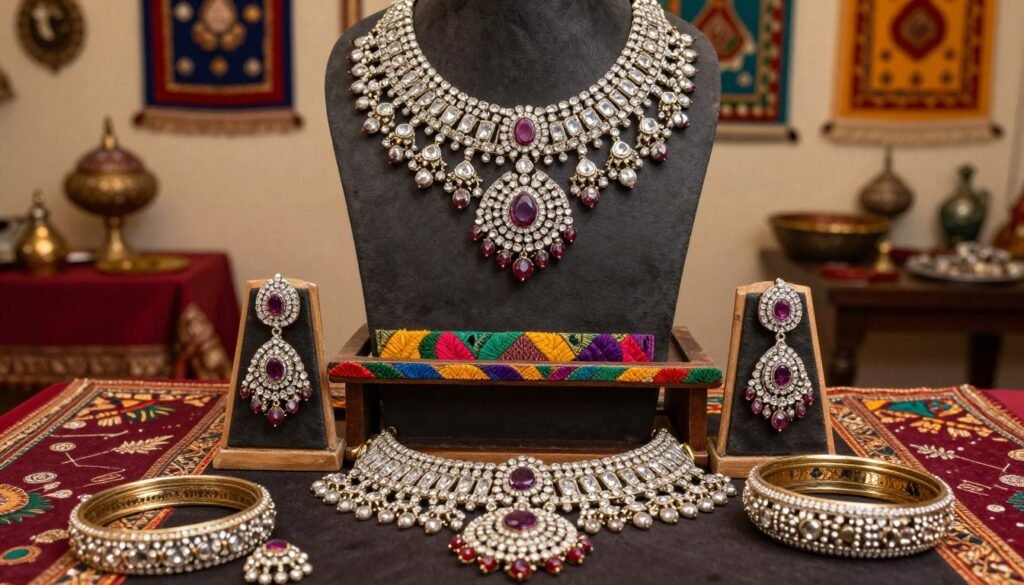
In Indian jewellery listings, “American diamond” most often names cubic zirconia, while “zircon” names a separate natural gemstone. The market label gives you a common meaning, not a full technical description. Sellers may use terms inconsistently, so check the stone material in the product details.
Specific gravity is the ratio of a material’s density to the density of water, used to compare how heavy equal volumes of materials are. That measure helps explain why two same-sized stones can feel different in weight. The name “American diamond” alone does not identify a stone with laboratory precision.
How the Market Label Is Used
In India, American diamond is commonly used as a market label for cubic zirconia jewellery. A seller may also write “AD,” “CZ,” or “American diamond stone,” depending on the listing. These names may describe the same kind of diamond-like stone, but the wording can vary from shop to shop.
The word “American” does not mean the stone came from the United States. It is a trade term used for jewellery styling and sales. A clear listing names cubic zirconia directly, then describes the metal and design separately.
Why Zircon and Zirconia Are Confused
Zircon and zirconia sound alike, yet they name different materials. Natural zircon is zirconium silicate, with the chemical formula ZrSiO₂. Zirconia is zirconium dioxide, a compound used to make cubic zirconia.
The shared “zircon” sound can make a product title seem more precise than it is. Look for the whole material name, not just a familiar part of it.
Treat a market label as a starting point, not a complete description of the stone.
That small distinction helps you compare a natural gemstone with a manufactured diamond simulant.
Treat “zircon” and “zirconia” as different material names, not interchangeable spellings.
American Diamond vs Cubic Zirconia: The Actual Difference
If a listing uses American diamond and cubic zirconia for the same stone, it is describing two names for one material, not two competing stones. The real difference is between CZ and diamond material. Natural diamonds form in the earth, while lab-grown diamonds are made in laboratories.
Cubic zirconia is a diamond simulant; a lab-grown diamond is diamond material. Lab-grown diamonds can be created using CVD or HPHT processes. Those methods make diamond, not CZ, so the two materials are fundamentally different despite a similar look.
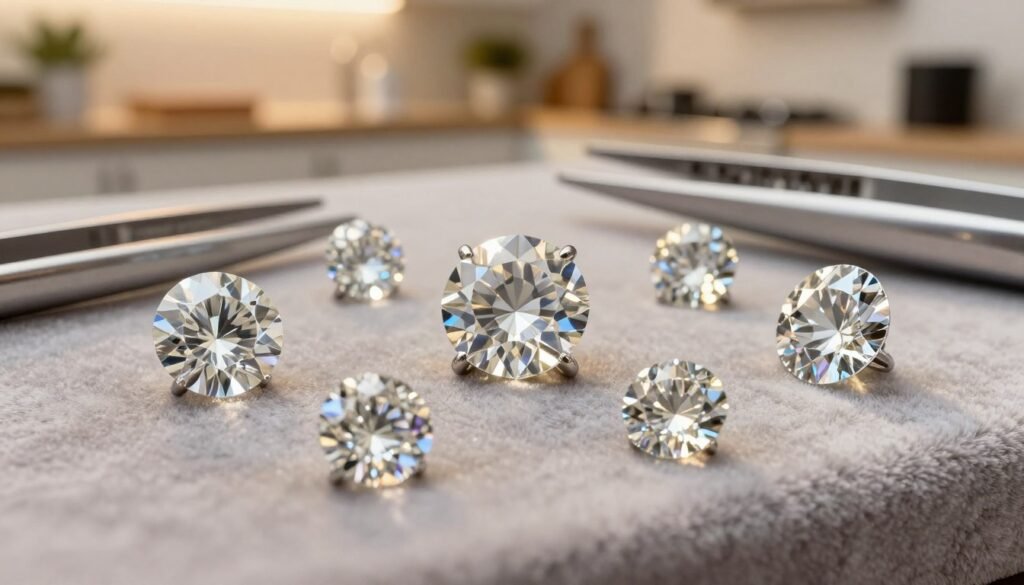
The table separates four names that buyers may meet in jewellery listings. “Origin” describes where or how the material forms, while the final column answers whether it is diamond material.
| Material or market name | Typical identity | Origin | Is it diamond material? |
|---|---|---|---|
| Natural diamond | Diamond | Forms in nature | Yes |
| Lab-grown diamond | Diamond | Made in a laboratory by CVD or HPHT | Yes |
| Cubic zirconia/American diamond | Diamond simulant | Manufactured material | No |
| Natural zircon | Zircon gemstone | Forms in nature | No |
A simulant copies some parts of diamond’s appearance without sharing its material identity. Cubic zirconia is one such simulant. Natural zircon is a separate gemstone, and it is not the same as zirconia or diamond.
The word “diamond” in a market name can describe a style rather than the stone’s composition. A buyer who wants diamond material should focus on the full product description, not a short display title.
That distinction matters when you compare natural diamonds, lab-grown options, and budget jewellery. Each can suit a different goal, but a similar appearance does not make them the same material.
If genuine diamond material is essential to you, neither the American diamond label nor a CZ description meets that requirement.
How Cubic Zirconia Gets Its Crystal Structure
The name cubic zirconia describes zirconium dioxide arranged in a cubic crystal structure. The compound and crystal form are related, but they are not the same thing. Zirconium dioxide is the material; “cubic” describes how its atoms are arranged.
Cubic zirconia is the cubic crystalline form of zirconium dioxide (ZrO₂). In nature, zirconium oxide forms monoclinic crystals, a different structure. The cubic form needs help to stay stable at ordinary temperatures.
The Material Behind CZ
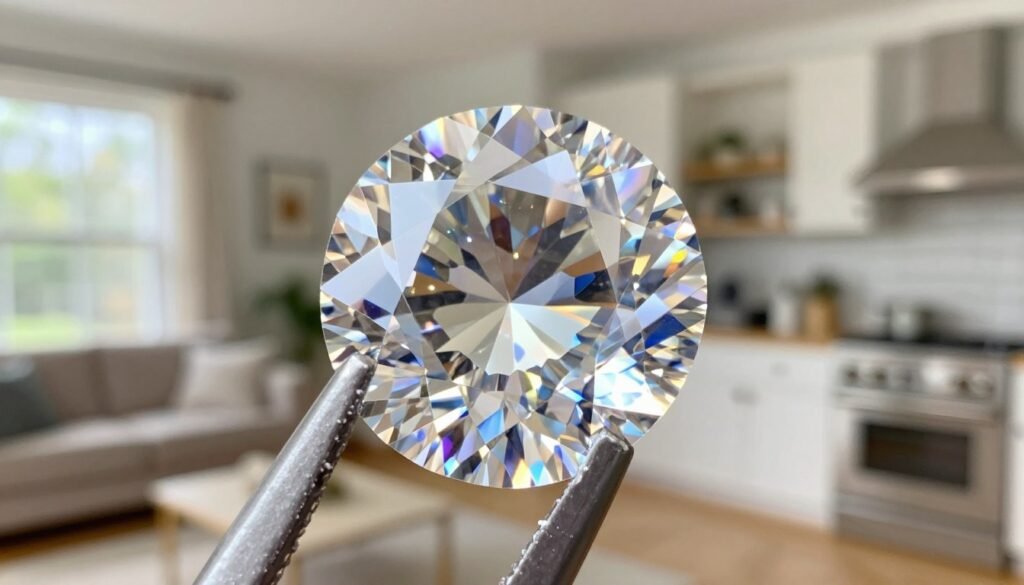
Zirconium dioxide contains zirconium and oxygen. The name zirconia synthetic may appear in descriptions of manufactured material, but it does not mean natural zircon. A cubic zirconia synthetic stone is made to provide a diamond-like appearance.
Changing a crystal’s structure can change how the material behaves. In CZ, the cubic arrangement is part of what gives the stone its useful look in jewellery. It is still zirconium dioxide, not diamond carbon.
Why Stabilizers Are Needed
Yttrium oxide or calcium oxide is typically added to help form and stabilize cubic crystals. These added compounds are called stabilizers. They support the cubic structure at ordinary temperatures, when zirconium oxide would otherwise favor its monoclinic form.
Commercial production of cubic zirconia began in 1976. That date marks the start of commercial production, not the first discovery of the material. Manufacturers can use different stabilizers while making the same broad kind of stone.
The stabilizer is what allows that cubic form to remain stable at ordinary temperatures.
Light Performance: Brilliance and Rainbow Fire
CZ can return plenty of light, but its stronger dispersion can make its flashes look more colorful than diamond’s. Dispersion is the splitting of light into colors. It can give a stone bright rainbow flashes, especially when the cut and light work together.
Cubic zirconia has a higher dispersion value than diamond, while diamond has a higher refractive index. Refractive index describes how strongly a material bends light. Neither number promises a certain look in every finished stone.
These figures compare materials, not finished jewellery. A stone’s cut, lighting, and viewing angle affect the brilliance you see, so two stones with the same material can still look different.
| Optical measure | Cubic zirconia | Diamond | What you may notice |
|---|---|---|---|
| Refractive index | 2.15-2.18 | 2.42 | Diamond bends light more strongly |
| Dispersion | 0.058-0.066 | 0.044 | CZ can show stronger rainbow flashes |
| Material identity | Zirconium dioxide | Carbon | The stones are different materials |
Brilliance often means the white light reflected from a stone. Rainbow fire means color flashes made as light separates. CZ may show more fire, but cut quality and lighting shape how noticeable that effect becomes.
A shop’s bright display lights can make a stone look lively. Daylight or softer indoor light may show a different balance of white light and color. The stone’s setting can also block some light from reaching its sides.
Judge a finished stone under more than one light source, since the setting and lighting influence the effect you see.
Hardness and Wear in Everyday Jewellery
CZ is harder than natural zircon, but it is still softer than diamond on the Mohs scale. The Mohs scale ranks how well one material resists scratches from another. It does not measure resistance to every impact or type of damage.
Cubic zirconia has a Mohs hardness of 8.0-8.5, compared with 10 for diamond. Natural zircon is about 6-7.5. These values give you a useful scratch-resistance comparison, not a promise that a stone cannot chip.
Scratch Resistance Is Not the Whole Story
Hardness is one part of wear, while a sharp blow can still harm a hard stone. A ring may hit a counter, door handle, or tool during normal tasks. Its exposed position makes contact more likely than with an earring.
A stone’s shape and setting also affect its exposure. A high setting can leave more of a stone open to knocks, while a protective rim can cover its edge. The metal around a stone matters to the way the whole piece handles contact.
What Frequent Wear Means for Each Stone
For a ring you wear often, consider your daily routine as well as the stone. Hands-on work brings more bumps and rubbing than wearing a pendant under clothing. An earring usually faces less direct contact, though it can still catch on fabric.
Diamond’s higher Mohs hardness gives it stronger scratch resistance than CZ. That does not make every diamond ring immune to damage. The design, setting, and way you use the piece still affect its condition.
Natural zircon has lower hardness than CZ, so it can be more prone to surface scratches. If you choose any stone for frequent wear, a secure setting can help protect its edges. Regular contact with hard surfaces may still leave marks over time.
For a ring exposed to regular knocks, consider the setting’s protection as well as the stone’s hardness.
Why Cubic Zirconia Feels Heavier by Size
A CZ stone of the same volume weighs more than a diamond because CZ is denser. Specific gravity compares a material’s density with water’s density. It helps explain why equal volumes of different materials do not have equal weight.
Cubic zirconia is about 1.65 times as dense as diamond. That ratio applies to the materials, not to every finished ring or pendant you might hold.
| Measure | Cubic zirconia | Diamond |
|---|---|---|
| Specific gravity | 5.50-6.00 | 3.50-3.53 |
| Specific gravity range | 5.50-6.00 | 3.50-3.53 |
| Relative density | About 1.65 times diamond | Reference material |
The figures compare equal volumes of each stone. A larger stone can weigh more than a smaller one, whatever its material. A thick setting can add more weight than a slim setting.
That is why the feel of a complete piece is not a direct test of its stone. A heavy ring may have more metal, a larger stone, or both. Two pieces with similar face-up sizes can also differ in depth and setting design.
Compare stones by size and material, not by the total weight of differently constructed jewellery pieces.
Color, Cut, and Clarity Options
CZ is usually colorless, though its manufactured nature allows it to be made in a range of colors. The design choice goes beyond a clear round stone. Color, shape, and facets can give one material several distinct styles.
Clarity describes visible inclusions or blemishes, while cut and faceting influence how a stone handles light. A clean-looking stone may suit a simple design, while a colored one can add contrast.
Color Choices Beyond Colorless
Colorless CZ can work with many metal tones and outfit colors. Colored stones offer another route, from a single accent to a matched set. Their color can change the mood of the same jewellery design.
How Shape and Cut Change the Look
Round stones give a familiar outline, while non-round shapes can make a piece feel more graphic or soft. Baguette, oval, and cushion are examples of available CZ cuts. The choice also affects how the stone fits its setting.
- Colorless stones for a clear, classic look.
- Colored stones for contrast or a coordinated accent.
- Round cuts for a familiar shape.
- Non-round cuts such as baguette, oval, or cushion.
Clarity does not describe the shape or color. It refers to visible marks within or on the stone. Cut describes the shape and the arrangement of its facets, which affect its light and overall style.
Match the stone’s color and shape to the design you plan to wear, rather than choosing by sparkle alone.
Price Factors for Cubic Zirconia Jewellery in India
CZ is generally the lower-cost choice when your priority is a diamond-like look rather than diamond material. The stone cost is only one part of a finished piece. Jewellery prices in India are quoted in INR.
A finished piece includes the stone, metal, setting, design, and workmanship. So two pieces with cubic zirconia may have very different prices. A low stone cost does not mean two finished pieces with different metals or labor should cost the same.
What the Stone Price Reflects
Stone size and cut can affect the quote. A larger stone uses more material, while a more detailed cut may need more work. These details can change the stone’s cost without changing its basic identity as cubic zirconia.
A natural or lab-grown diamond is diamond material, while CZ is a simulant. If appearance is your main goal, the simulant can offer a lower-cost path to a diamond-like style. If the material itself matters, that price comparison answers a different need.
What the Finished Piece Adds
The metal type and weight shape the cost of a ring or pendant. Gold, silver, and plated finishes are not the same material choice. Setting complexity can add labor, especially when a design has many small stones or detailed metalwork.
Workmanship also matters. A simple setting may need less labor than a piece with fine details or a complex shape. Design, metal, and setting can make a large difference even when the center stone is similar.
Compare descriptions that give the same details before weighing one quote against another. A stone-only claim leaves out the parts that make a finished piece wearable and complete. Ask yourself whether the quoted piece includes the metal, setting, and stated workmanship.
Compare the full piece specification, not a stone-only description, before deciding whether a quote fits your budget.
Checking Stone Labels and Purchase Documents
A clear material description is more useful than a product title that only promises a diamond-like look. Written details help you understand the stone and the rest of the piece. A verbal label alone can leave room for confusion.
A BIS hallmark identifies precious-metal fineness, not the identity of a gemstone. A gem identification report assesses the stone material, while a product description records the seller’s declared material.
What the Product Description Should Name
Use these checks to compare the stone, metal, and terms attached to a piece:
- Look for “cubic zirconia” or “CZ” in the material description.
- Read “American diamond” as a market label, not a complete technical name.
- Check metal details separately from the stone description.
- Ask what documentation or service terms apply to the piece.
The exact material wording matters because sellers may use American diamond differently. “Zirconia synthetic” and “cubic zirconia” may describe manufactured material, while natural zircon names another gemstone. A plain, complete product description gives you a better basis for comparison.
What Documents Can and Cannot Confirm
A BIS hallmark tells you about precious-metal fineness. It does not confirm whether the stone is CZ, zircon, or diamond. A gem identification report focuses on the stone material, not the metal’s purity.
A product description states what the seller says the piece contains. It can help you compare listings, but it is not the same as a gem report. Ask what service terms apply if the stone becomes loose or the setting needs repair.
Appearance alone cannot settle a stone’s identity. A qualified gem professional can use suitable testing methods, while a title or photo may leave key details unclear. Keep the material and metal descriptions distinct in your notes.
If the written material description and the seller’s verbal explanation differ, ask for the description to be corrected before purchase.
Choosing a Stone for Your Kind of Wear
For affordable diamond-like styling, CZ is the straightforward choice; for genuine diamond material, choose a natural or lab-grown diamond instead. The right choice depends on how you plan to use the jewellery. The setting matters alongside the stone.
A diamond simulant offers a diamond-like appearance but is not a substitute when you specifically want diamond material. CZ jewellery is common in rings, earrings, pendants, and occasion pieces. Each use brings a different balance of look, contact, and material needs.
These three situations can help you choose a direction without treating every piece alike:
- For occasion or fashion jewellery where appearance comes first, consider cubic zirconia.
- For a frequently worn ring, weigh scratch resistance and how well the setting protects the stone.
- For a piece that must contain diamond material, choose a natural or lab-grown diamond.
A party earring may spend most of its time in a jewellery box, while a ring can meet hard surfaces each day. That difference changes how much contact the stone and setting may face. A lower-cost stone can suit an occasional look without meeting every buyer’s needs.
Fashion jewellery can also let you try a bold shape or color without making the stone material your main concern. But a sentimental gift may have a clear material requirement. In that case, choose the stone first and the design second.
The setting is part of the choice, not just a frame around the stone. An exposed design may suit a special occasion, while a more protective one may better fit regular use.
Make the material requirement explicit before settling on a design.
Care for the Stone and Its Setting
A gentle clean can remove everyday film without subjecting the stone or its setting to harsh treatment. Mild soap, warm water, and a soft brush are a gentle combination for CZ jewellery. The metal finish also needs care.
Gold, silver, and plated metal finishes can respond differently to cleaning products. Avoid harsh chemicals that may harm the metal or finish. A soft approach helps you clean the stone without putting extra strain on the setting.
Gentle Cleaning at Home
Mix mild soap with warm water, then gently brush the stone and setting. Use a soft brush rather than a rough pad. Take care around small prongs and fine details where dirt can collect.
Rinse the piece well to remove soap, then dry it with a soft cloth. Do not leave it damp in a closed box. Soap left around the setting can dull the finish or collect grime.
Storage and Setting Checks
Store each piece separately so it has less contact with other jewellery. A pouch or divided box can keep stones and metal parts from rubbing together. Separate storage also helps prevent chains from catching on settings.
Check the setting before wearing the piece if a stone feels loose or a prong looks bent. A jeweller should assess a loose stone or damaged setting before it is worn again. A small problem can grow if the piece catches on clothing or another object.
Metal and finish can affect which cleaning products are safe. If a piece has a plated surface, avoid strong cleaners that may alter its appearance. Use only gentle soap and water unless the care instructions for that item say otherwise.
Put the piece away dry and separate from other jewellery to reduce avoidable contact and scratches.
Questions to Settle Before You Buy
Before comparing two pieces, make sure you are comparing the same stone material and a clearly described metal. Clear details help you compare like with like, especially when listings use different market language.
Stone material and metal purity describe separate parts of a piece. In Indian jewellery, 18K and 22K are common gold-purity descriptions. Those figures describe the gold, not the stone.
Use these questions to bring the key details into one conversation:
- What is the stone material?
- What is the metal and its purity?
- How is the stone secured?
- What workmanship or repair terms apply?
- Which care instructions apply to this piece?
Ask for the stone name in plain terms, such as cubic zirconia, natural zircon, or diamond. A market name may not tell you enough to compare two listings. The same-looking piece can use a different stone or a different metal.
Metal purity and stone identity should stay separate in your comparison. An 18K gold setting does not make the stone a diamond, and a CZ stone does not tell you the metal’s purity. The description needs both details.
Check how the stone is held in place. Prongs, a bezel, and other setting styles can affect the look and the stone’s exposure. Ask which repair terms apply if a stone becomes loose.
Keep your material, metal, setting, service, and care answers together with the purchase details.
Clear answers make two pieces easier to compare, even when their sellers use different terms. They also give you useful details if the jewellery later needs service.
Keep the answers with your purchase details so you can refer to them if the piece needs care or repair.
Conclusion
In India, American diamond usually means cubic zirconia, so the two names generally point to the same diamond simulant. It can give you a diamond-like look, but it is not diamond material. That distinction is the key to comparing a design, its cost, and what you expect from it.
If the look matters most, set a budget and compare the full piece details. If genuine diamond material matters, focus on natural or lab-grown diamond options instead. Set your spending limit and decide whether genuine diamond material or a diamond-like look matters more before you browse.